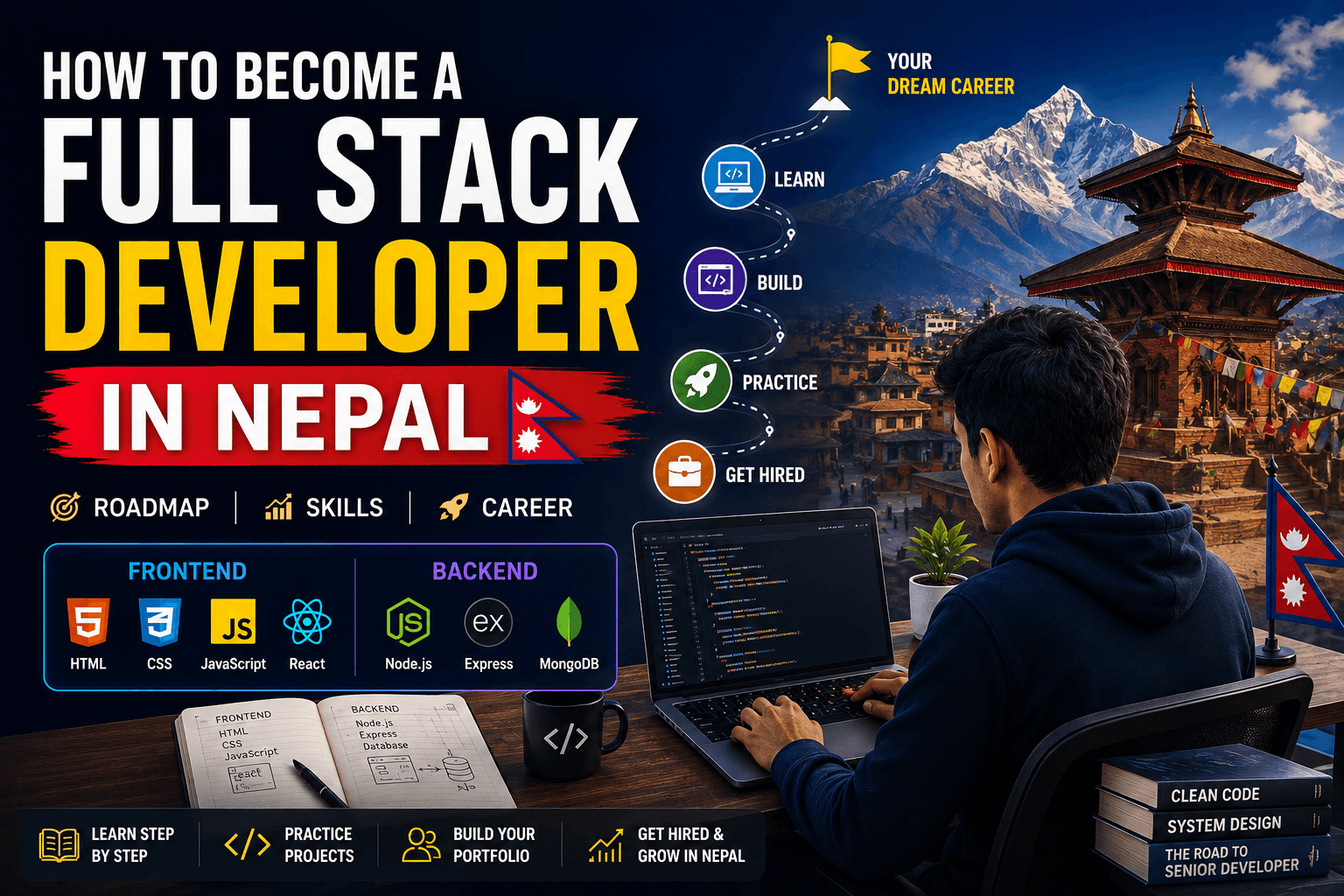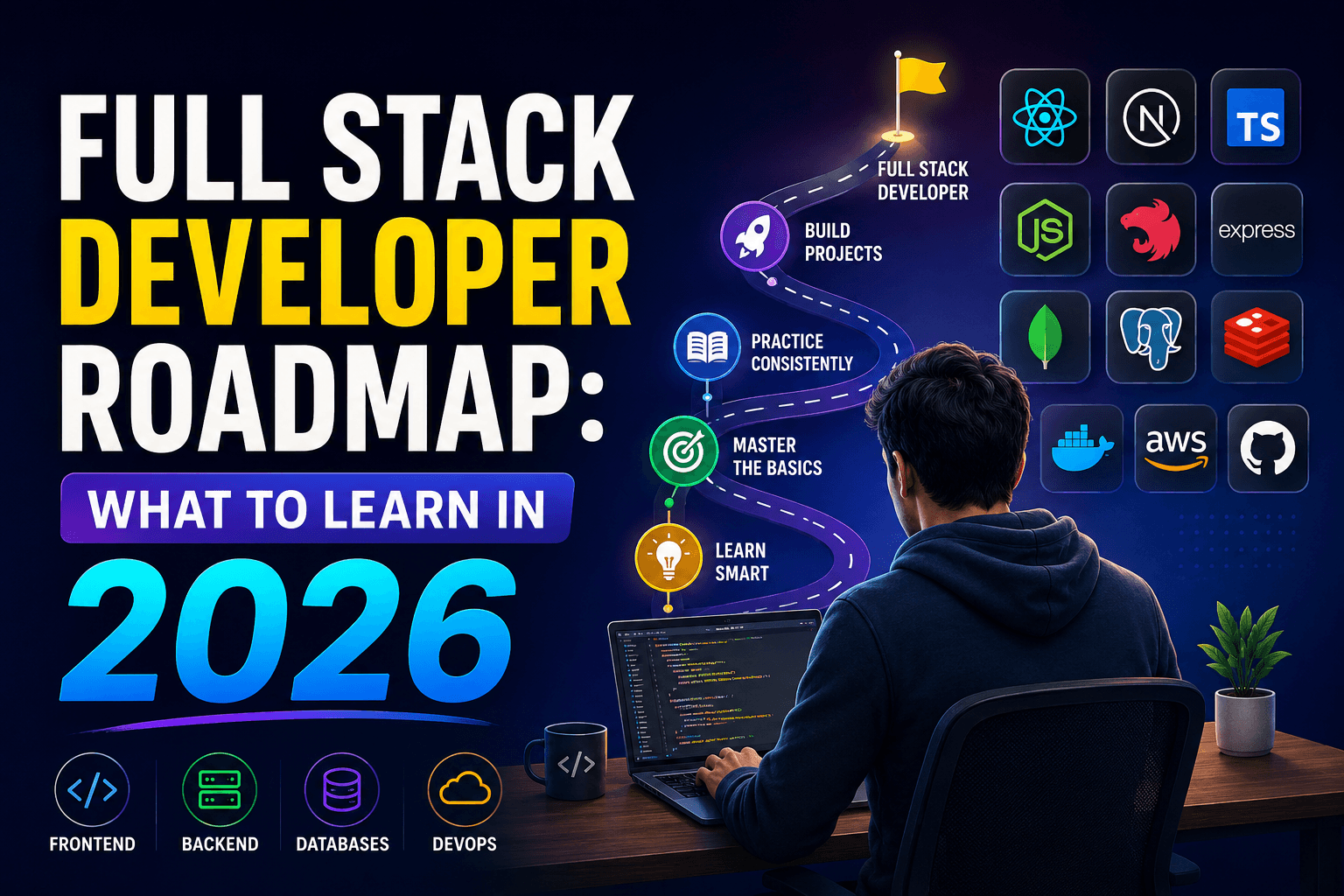
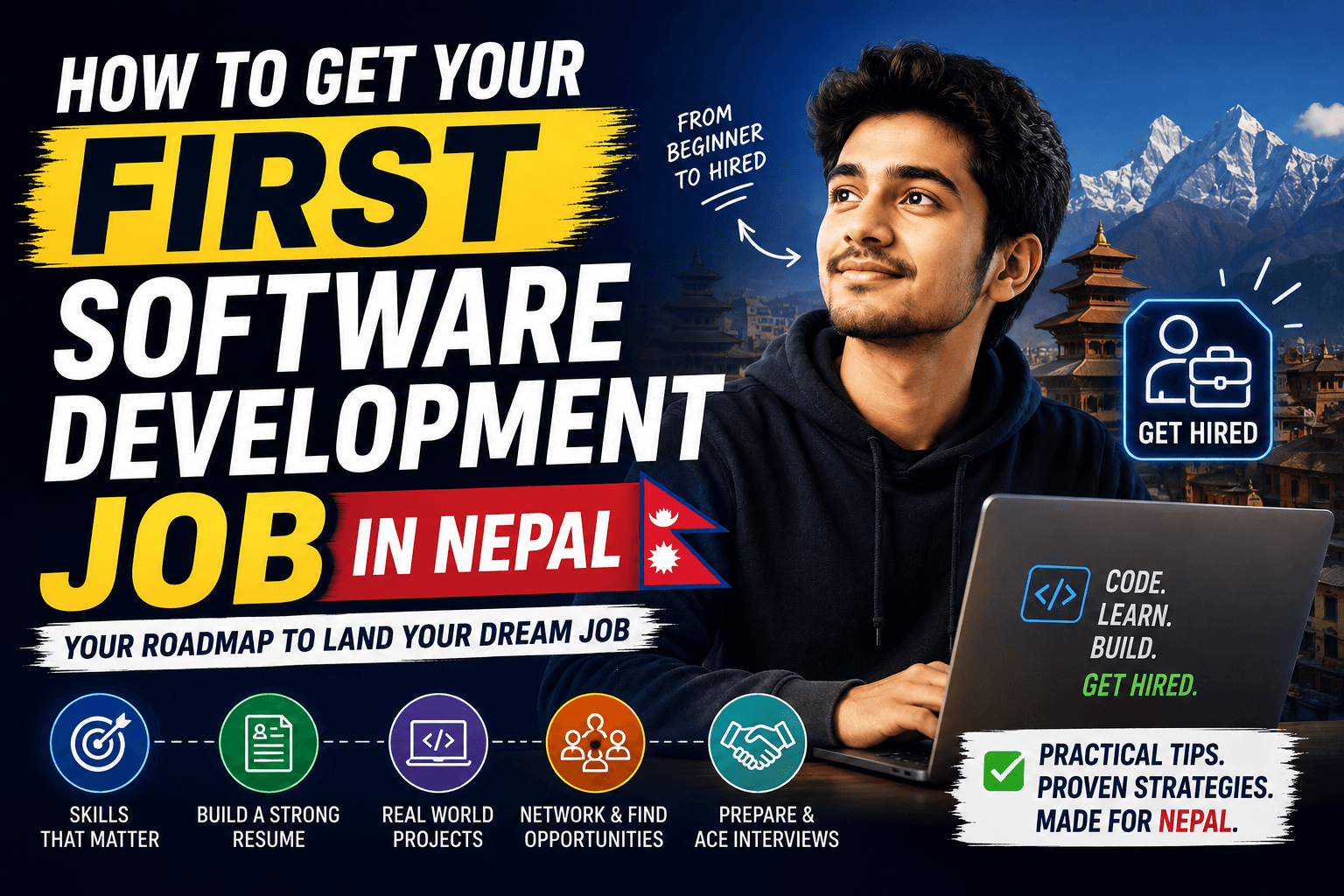
Every batch of computer science and IT graduates in Nepal hits the same wall around the same time: a degree, a handful of college assignments, and a job market that doesn't seem to care about either. For anyone trying to become a full-stack developer in Nepal, the path from graduation to a first software role can feel especially unclear.
The advice that circulates — "just build projects," "learn DSA," "apply everywhere" — isn't wrong, but it's generic enough to apply to any country's job market. Nepal's tech hiring has its own shape, and understanding that shape saves months of applying into a void.
This is a practical look at how the Nepali software job market actually works, what gets a fresher's application actually looked at, and where the common advice needs local context to be useful.
Understanding the market you're actually applying into
Nepal's software industry is smaller and more concentrated than the generic "tech job market" advice assumes, and it's worth being clear-eyed about the shape of it before job-hunting inside it.
- It's heavily Kathmandu-centric. Most established software companies, from outsourcing firms to product startups, are based in and around Kathmandu and Lalitpur. Remote-first roles exist and are growing, but the bulk of entry-level hiring still happens through companies with a physical office there.
- Outsourcing and service companies dominate hiring volume. A large share of the industry works on contract or outsourced development for international clients — this is where most fresher hiring actually happens, more than at the smaller number of Nepal-based product companies building their own software.
- Salaries vary enormously by company type. Entry-level pay at a small local firm and entry-level pay at an established outsourcing company or product company can differ by two to three times for the same job title. Broadly, fresher roles tend to start somewhere in the NPR 25,000–50,000 a month range, with wide variation either side depending on the company, your stack, and your English communication skills — treat any specific number you read online as a rough anchor, not a promise.
- Internships are the primary entry funnel, more so than in markets where fresh graduates are hired directly into full-time roles. A large share of junior hires convert from a paid or unpaid internship at the same company rather than applying cold into an open "junior developer" posting.
None of this is discouraging news — it's context that changes where you should actually be spending your effort.
What actually gets you noticed as a fresher
A portfolio that shows you can build, not just that you attended a bootcamp
A GitHub full of tutorial clones (the same to-do app, the same weather app everyone builds from the same YouTube video) doesn't differentiate you — hiring managers see dozens of identical ones. What does stand out:
- One or two projects that solve a problem specific enough that it's obviously not copied from a tutorial — something for a local use case, a tool you built because you needed it, an integration with something like eSewa or Khalti if you're building anything with payments.
- A working deployed link, not just source code — being able to click through something live matters more than most freshers assume.
- A README that explains a decision you made, not just installation steps. This is a small thing that almost nobody does, which is exactly why it stands out.
English communication, specifically written communication
A large share of Nepal's software jobs — outsourcing work especially — involve working directly with international clients, in English, often async over Slack or email rather than in person. Comfortable, clear written English is a genuine hiring filter here, not a soft nice-to-have. If this is a weak point, practicing it (writing clear PR descriptions, clear bug reports, clear documentation) is time as well spent as another algorithm problem.
Practical stack depth over broad, shallow exposure
Nepali hiring for junior roles skews more toward "can you actually build and ship a working feature in our stack" than toward the heavy algorithm-interview screening common at large global tech companies. That doesn't mean fundamentals don't matter — it means depth in one stack (say, React and Node, or React and NestJS) that you can talk about in real detail is usually worth more at this stage than shallow familiarity with five different frameworks.
A referral or a direct connection, where possible
Given how concentrated the industry is, personal networks carry real weight. This isn't unique to Nepal, but it's more pronounced in a smaller market — a lot of fresher hiring happens through college seniors, internship supervisors, or local tech community connections rather than purely through cold applications on job boards.
Where to actually look
- Local job portals — Merojob, jobs.com.np, and similar sites are where most Nepal-based companies post openings; check them regularly rather than relying on one-time searches.
- LinkedIn, used actively — following companies you're interested in, engaging with posts from people who work there, and reaching out directly to ask about openings tends to outperform blind applications through the "Easy Apply" button alone.
- University placement cells and internship programs. Many companies run structured internship intakes tied to specific colleges — worth actively asking your department about rather than waiting for it to be announced.
- Local tech communities and meetups — Kathmandu has an active developer community scene (language- and framework-specific meetups, Google Developer Group events, hackathons). These are where a lot of the informal "we're hiring" conversations actually start, well before a listing goes up publicly.
- Remote and freelance platforms (Upwork, Toptal, and similar) as a parallel path, not necessarily a replacement for local employment — freelance work, even part-time alongside a local job search, builds a portfolio of real client work and often pays meaningfully better per hour than local entry-level salaries, though it comes without the stability or mentorship of a first employed role.
What the interview process usually looks like
For most Nepal-based companies hiring freshers, expect some combination of:
- A practical take-home task or small coding exercise in the stack the role uses — closer to "build this small feature" than to a pure algorithms whiteboard round.
- A technical conversation about your own projects — being able to explain why you made a decision in your portfolio project, not just that it works, matters more here than in a generic resume screen.
- A round assessing communication and English fluency, sometimes informally folded into the technical conversation rather than run as a separate step, especially for outsourcing-facing roles.
- Salary and expectation discussion where negotiating room for a true fresher is usually limited — the leverage point tends to come at the first job change, six months to a year in, once you have real production experience to point to.
Trade-offs worth thinking through deliberately
Local job vs remote/international work from day one
Remote work for international clients, through Upwork or a direct international employer, often pays significantly more than a local entry-level role. The trade-off is stability, mentorship, and structure — a first local job with an actual team and code review process tends to build foundational skills faster than solo freelance work does, even at lower pay. Many developers do both in sequence: a first local job for the grounding, then a move toward remote or international work once they have real production experience behind them.
Internship-to-hire vs applying directly for junior roles
An internship, even unpaid or low-paid, at a legitimate company is often a faster and more reliable path to a real offer than repeatedly applying for "junior developer" postings that increasingly expect some prior experience. The trade-off is accepting lower pay for a defined period in exchange for production experience and, ideally, a direct conversion path.
Breadth vs depth in your first learning phase
Learning one stack deeply enough to build and explain a real project beats shallow exposure to many frameworks, for the specific purpose of getting a first job. Breadth becomes more valuable later, once you have a foundation to generalize from.
Common mistakes
- A portfolio of unmodified tutorial projects that a hiring manager immediately recognizes, with nothing showing independent problem-solving.
- Applying only through job portals, skipping the local tech community and LinkedIn engagement where a lot of informal hiring actually starts.
- Neglecting written English communication, which is a real filter for client-facing and outsourcing work specifically.
- Expecting international-market salary benchmarks for a first local role, and being discouraged by the gap instead of planning a realistic path toward it.
- Grinding algorithm problems exclusively, at the expense of having anything real to show and talk about in an interview.
- Giving up on internships because they're unpaid or low-paid, without weighing them against the realistic alternative of a longer cold job search with no production experience to show for it.
Practical recommendations
- Build one or two projects that solve a real, specific problem — not another tutorial clone — and deploy them somewhere clickable.
- Treat written English communication as a skill to practice deliberately, not an assumed strength.
- Go deep in one stack before going broad, at least for your first job search.
- Use local job portals, but don't rely on them alone — LinkedIn engagement and local tech community involvement surface opportunities portals miss.
- Take a legitimate internship seriously as a primary path, not a fallback.
- Set salary expectations against the realistic local range for a first role, and think of remote/international work as a path you build toward with experience, not necessarily a starting point.
Conclusion
Getting a first software job in Nepal isn't a smaller version of getting one anywhere else — it runs on its own mechanics: a concentrated, Kathmandu-heavy market, outsourcing work as the dominant entry point, internships as the real funnel more than direct junior hiring, and English communication as a genuine differentiator rather than an afterthought. None of that makes it harder in some abstract sense. It just means the generic advice — grind LeetCode, spam applications — needs to be filtered through what actually moves the needle here: a real project you can talk about in depth, a network you've actually built, and a realistic read on where the first job sits in a longer career path rather than the whole destination.